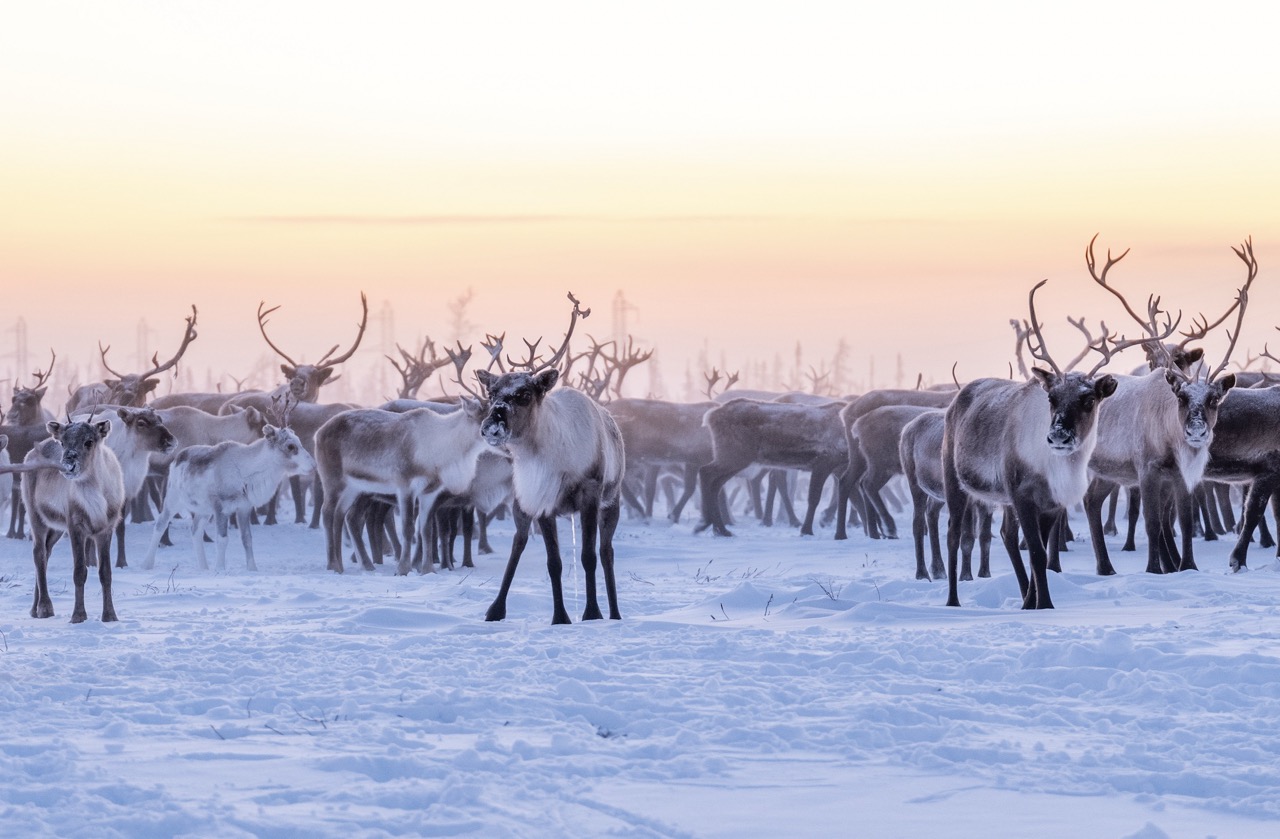
As we are now in the mid-winter season and daylight is still short, we wanted to share a story how scientists are highlighting a fascinating real-world trait of Arctic reindeer that mirrors the season itself.
According to ScienceAlert, research shows that reindeer (Rangifer tarandus) undergo a seasonal change in their vision: their eyes shift from gold-tinged hues in summer to deep blue in winter. This change helps them see better during the long, dark Arctic winter.
The transformation occurs in the tapetum lucidum, a reflective layer at the back of the eye that improves low-light vision. During winter, prolonged darkness causes changes in eye structure that allow more light to be scattered back through the retina, increasing visual sensitivity — even though images become slightly less sharp. This adaptation helps reindeer spot predators and locate food in near-constant twilight.
At a time when reindeer are closely associated with winter traditions, this discovery offers a striking example of how animals naturally adapt to extreme seasonal conditions.
Sources:
ScienceAlert, “Reindeer Eyes Do Something Incredible When Winter Comes”;
Stokkan et al. (2013), Proceedings of the Royal Society B.