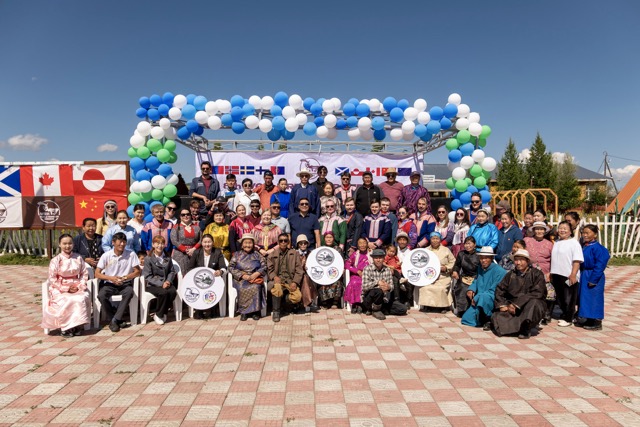
After several remarkable days in Tsagaannuur, the 8th World Reindeer Herders Congress (8WRHC) has come to an end. The Congress has been much more than a series of meetings, it has been days filled with conversations, new friendships, professional exchange, cultural experiences and, above all, the opportunity for reindeer herders to meet and spend time together.
Hosted in the homeland of Mongolia’s Dukha reindeer herders, the Congress brought together reindeer herders, representatives of Indigenous communities, organisations, researchers and partners from Mongolia, Norway, Sweden, Finland, USA and Scotland.
From the very beginning, the Dukha community was at the heart of the Congress. Local reindeer herders and families welcomed participants to Tsagaannuur and shared their culture, traditions and knowledge with their international guests. Cultural performances, reindeer racing and the Reindeer Herders’ World Championship of Lasso Throwing created moments of celebration alongside the formal and professional programme.
But the Congress was also a place for serious discussion about the realities facing reindeer herders today.
One of the main themes was Land Degradation affecting reindeer herding regions. During the professional and regional sessions, participants discussed land degradation and 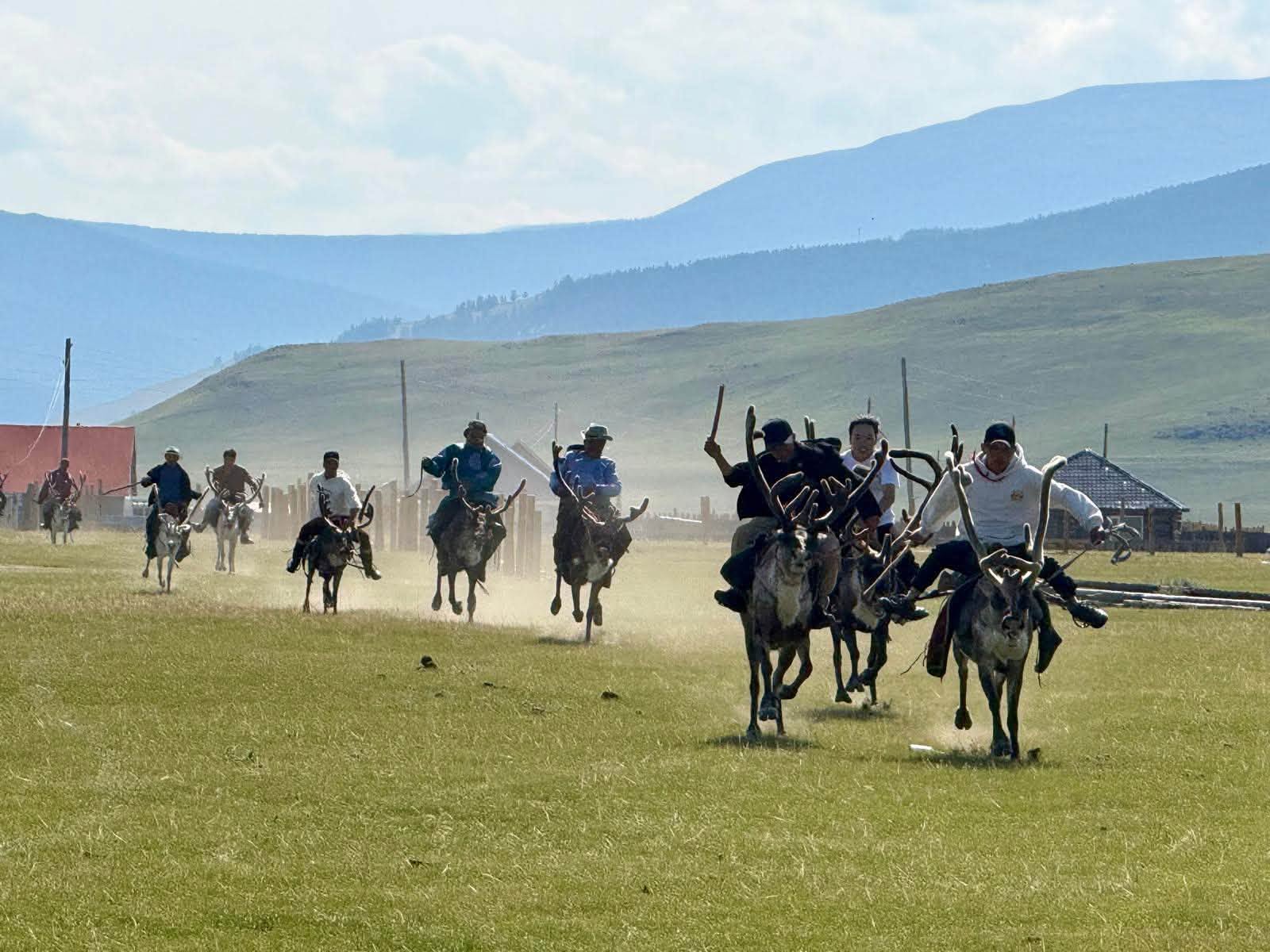 other pressures affecting grazing areas, as well as the importance of strengthening the voice of reindeer herders in decisions concerning their traditional lands, livelihoods and future.
These discussions were particularly relevant in 2026, the United Nations International Year of Rangelands and Pastoralists (IYRP) – an important year for drawing global attention to pastoralist peoples and the sustainable management of rangelands.
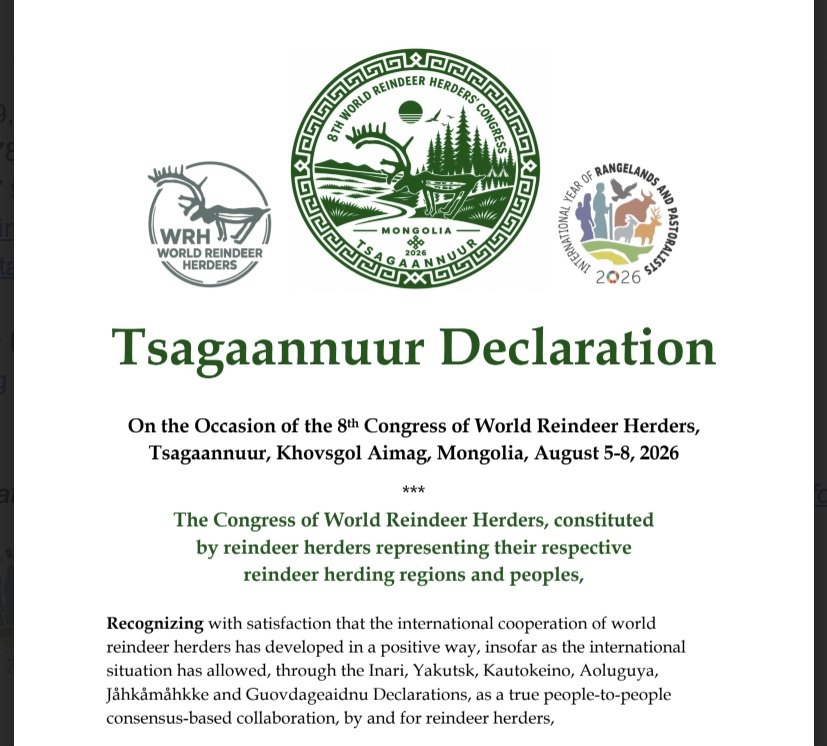
A major outcome of the Congress was the adoption of the Tsagaannuur Declaration during the formal closing session.
The Declaration continues a long tradition of statements adopted by World Reindeer Herders at previous congresses and reaffirms reindeer herders’ commitment to peace, stability and constructive cooperation in the north. It describes this cooperation as a people-to-people, consensus based collaboration created by and for reindeer herders.
At the centre of the new Declaration is a clear message: there can be no future for reindeer herding without grazing lands for the reindeer.
The Congress has elected a new WRH Council for 2026-2030:
- President: Mrs. Inger Anita Smuk, Norway
- Vice-president: Mrs. Helena Omma, Sweden
- Mongolia: Mrs. Ganbat Punsel
Mr. Shangir-Ool Batzaya - Scotland: Mrs. Elizabeth Smith
Mrs. Emily Smith - Finland: Mr. Juha Magga
Mr. Per Oula Juuso - Sweden: Mr. Mikael Kuhmunen
- Norway: Mr. Johan Mathis Turi
Mrs. Marit Meløy
(Sweden will complement with another person)
At the first WRH Council meeting on 8 August in Tsagaannuur, the Council members have appointed the new Board for 2026-2030:
- Chair: Ms. Sara Elvira Kuhmunen, Sweden
- Vice-chair: Ms. Tuul Erdenekhuyag. Mongolia
- Vice-chair: Mr. Per Thomas Oskal, Norway
- Members: Ms. Anne Maret Labba, Finland
Mr. Alexander Smith, Scotland - Deputies: Mr. Nils Anders Appfjell, Norway
Mr. Janne Näkkäläjärvi, Finland
Mr. Matto Skum, Sweden
The Congress was organised by World Reindeer Herders (WRH) in cooperation with the International Centre for Reindeer Husbandry (ICR) and with the Dukha Reindeer Herding Community of Mongolia as local co-hosts. The Congress was also supported by the GEF/UNEP Reindeer Herding and Resilience project.
Photos: Sophus Reinert and Andreas Ausland
DOWNLOAD THE TSAGAANNUUR DECLARATION